
Sparkr: Meet & Chat & Dating
Pix GammingCommunication
3.0233.00 Reviews
- Version
- 1.3.0
- Installs
- 50.00K
- Age Rating
- Mature 17+
Screenshots
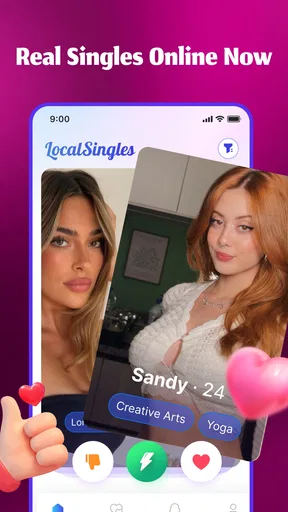

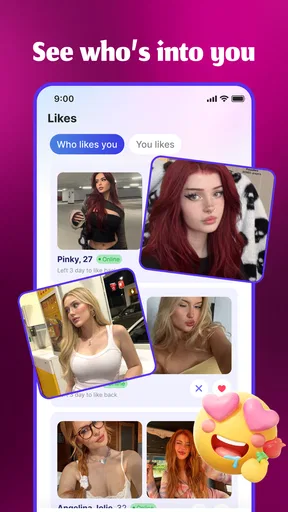

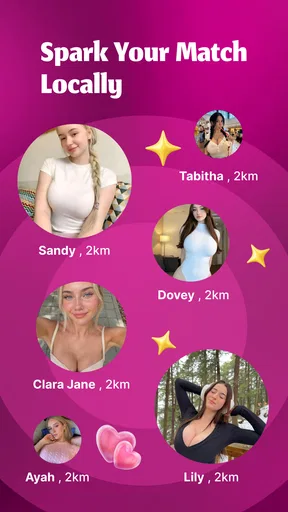
Our Review of Sparkr: Meet & Chat & Dating
 Analysis by Appyee
Finding a dating app that feels easy to approach is harder than it sounds. Many services either bury the useful parts under endless profiles or turn the first conversation into a performance. I spent time with Sparkr: Meet & Chat & Dating to see whether its central promise—helping people move from a first spark into an actual chat—works in everyday use. My impression is mixed but clear: this is a communication-focused dating app that may suit someone who wants a lighter way to begin meeting people, while users expecting a mature, highly polished dating platform may find its rough edges difficult to ignore.
Released on March 16, 2025, Sparkr comes from Pix Gamming and is free to install. It belongs to the communication category rather than presenting itself only as a traditional matchmaking tool. That distinction matters because the useful part of the experience is less about treating profiles like a catalog and more about deciding whether a conversation is worth starting. The app has reached over 50 thousand installs, but its average rating is 3.0 from around 375 ratings, with roughly 233 written reviews. Those figures suggest curiosity from users, alongside a noticeable amount of hesitation about the overall experience.
What Sparkr’s chat-first approach changes
The most important capability here is the invitation to start talking instead of spending too long trying to make a perfect decision from a profile. In my experience, that changes the emotional pressure of dating apps. A profile can look appealing, but it cannot tell me whether someone is friendly, responsive, or able to hold a natural conversation. Sparkr’s focus makes the first exchange the practical test.
That sounds simple, yet it has a useful consequence: I found myself judging potential connections by the quality of the interaction rather than by appearance alone. A short, ordinary message can reveal more than a carefully selected photo. Does the other person answer the question I asked? Do they ask something back? Does the conversation feel comfortable, or am I carrying it alone? These are the signals that become important when chat is treated as the center of the experience.
The approach is particularly helpful for people who dislike the silent waiting period common in dating apps. On a conventional swipe-heavy service, it is easy to collect matches without ever learning whether there is any real interest. A communication-oriented app can reduce that gap, at least in principle, because the value of a connection is tested through dialogue. I would not call this a guarantee of better matches, but it gives users a more meaningful way to evaluate them.
There is also a trade-off. Chat-first dating requires more personal effort than simply browsing. If I want useful results, I need to write something specific, respond thoughtfully, and notice when the exchange is one-sided. Sparkr cannot create chemistry for two people who do not contribute. Its strongest idea therefore rewards active users, not people looking for a completely passive matching experience.
Using the app without turning every chat into an interview
The best way to use Sparkr is to treat the first message as a small opening, not as a full introduction. I would avoid sending a generic greeting and instead refer to something visible in the other person’s profile or begin with a simple question that allows an easy answer. The aim is not to impress immediately. It is to make replying feel natural.
One practical method is the “one detail, one question” rule. I might mention a shared interest and then ask how the other person got into it. This keeps the message short while giving the conversation somewhere to go. If the response is brief but engaged, I can continue. If the response ignores the question or repeatedly gives nothing back, that is useful information too. The app’s chat emphasis works best when I use it to observe mutual effort rather than chase every possible connection.
I also recommend setting a personal stopping point. A conversation does not need to continue indefinitely before I decide whether it is worthwhile. After a few exchanges, I can usually tell whether the tone is respectful and whether both people are participating. If it feels forced, ending politely is healthier than treating the match as an obligation. This is one of the less obvious advantages of a chat-centered experience: it makes disengaging based on behavior easier than relying on assumptions from a profile.
Another useful habit is to keep early conversations inside the app until trust has developed. I would not rush to share a phone number, workplace, home area, financial details, or other identifying information simply because the first messages feel pleasant. A dating app can introduce people, but it cannot replace ordinary judgment. Sparkr is most useful when it supports a gradual decision-making process rather than encouraging instant confidence.
Because the app is rated Mature 17+, I would still treat age and personal safety seriously. The age label is not a substitute for checking whether a conversation feels appropriate or for arranging a first meeting carefully. If a meeting eventually makes sense, I would choose a public place, tell someone I trust where I am going, and keep my own transport or exit plan. Those steps are especially important for younger adults and for anyone who tends to assume good intentions too quickly.
A realistic evening with Sparkr
Imagine finishing work or school and having only a short window for social browsing. On a traditional dating app, I might spend that time swiping through profiles, matching with someone, and then leaving the app without a conversation. With Sparkr, I would be better served by choosing one or two promising introductions and writing messages that invite an actual reply.
Suppose one person answers warmly but keeps the discussion balanced, while another replies with one-word messages and never asks anything in return. The first connection deserves more attention, even if the second profile looked more attractive at a glance. That is the kind of everyday judgment the app’s core capability supports. It turns a vague feeling of interest into observable interaction.
After a few messages, I might suggest continuing the topic later rather than forcing a long exchange in one sitting. This is a small but important workflow. Dating conversations often become awkward when both people feel they must remain constantly available. A relaxed pause can show whether the other person returns with genuine interest. If the chat disappears as soon as I stop carrying it, I have learned something without investing too much time.
For someone recently moving to a new city, this approach could be more useful than a purely appearance-led service. The person may not be searching for an immediate relationship; they may first want to discover whether they can comfortably talk with someone nearby. For a shy user, the ability to begin with text can also feel less intimidating than approaching strangers in person. The benefit is not that every conversation will be good, but that the first step can be manageable.
Where the experience asks for patience
The average rating of 3.0 tells me not to present Sparkr as a finished alternative to the biggest dating platforms. The app is relatively new, and its current version is 1.3.0. In practical terms, that means I would approach it with realistic expectations: the concept may be appealing, but the surrounding experience may not feel as refined or predictable as services with much longer development histories.
The smaller audience is another consideration. With over 50 thousand installs, Sparkr has some reach, but it is not operating at the scale of the most established dating apps. A smaller pool can be an advantage for someone tired of an overwhelming stream of profiles, yet it can also make local discovery slower. If I live outside a large population center, I may find fewer relevant conversations and need more patience before the app feels active.
The free entry point is welcome, but in-app purchases range from $2.49 to $59.99 per item. That range makes it important to understand my own spending limit before paying for anything. I would use the free experience long enough to decide whether the available conversations and general flow are worthwhile. Paying cannot manufacture compatibility, and a premium purchase is difficult to justify if the basic chat experience does not already feel useful.
This is also where Sparkr compares differently with familiar alternatives. Large dating services usually offer a broader pool, more established habits among users, and a greater chance of finding people nearby. Their weakness is often noise: endless browsing, repetitive introductions, and matches that never become conversations. Sparkr’s appeal is its narrower focus on communication, but its weakness is the opposite side of that trade-off: fewer users and less certainty about how consistently active the community will be.
Social platforms and messaging apps remain better choices when I already know the person or want a broad community rather than a dating context. Sparkr makes more sense when the intention is to meet someone new and explore romantic or social potential through conversation. It is not a replacement for a general messenger, and I would not choose it if my main goal were group discussion, professional networking, or staying in touch with existing friends.
Small decisions that improve the first conversation
One non-obvious strength of a chat-centered app is that it gives me a way to test compatibility before making a larger commitment of time. I can look for conversational patterns rather than isolated compliments. Someone who respects a boundary, remembers a detail, or responds with curiosity is showing more useful information than someone who sends intense praise immediately. I would pay attention to consistency over charm.
A second insight is that I should not measure success by the number of chats I start. Starting too many conversations at once usually lowers the quality of each one. With Sparkr, a smaller number of deliberate openings fits the product’s central idea better. It also makes it easier to remember what each person said, avoid accidental repetition, and notice which conversations develop naturally.
A third trade-off concerns directness. Since the app encourages moving toward chat, vague flirting can become tiring quickly. I would be honest about whether I am looking for dating, a slower connection, or simply getting to know people. Clear expectations do not guarantee a match, but they reduce wasted time and make it easier for the other person to decide whether to continue.
I would also avoid treating a rapid reply as proof of serious interest. Fast messaging can be enjoyable, but reliability matters more than speed. A person may be enthusiastic for one evening and unavailable afterward. The better test is whether the interaction remains respectful and reasonably balanced over time. Sparkr helps reveal that pattern only if I resist the temptation to judge the connection after a handful of exciting messages.
Who is most likely to enjoy it
Sparkr is best suited to adults who want a straightforward entry into meeting and chatting, especially those who feel that conventional swiping produces too many empty matches. It may also work for someone who prefers written conversation before considering a call or an in-person meeting. The free installation lowers the barrier to trying it, while the communication category accurately reflects the way I would use it: as a place to begin interaction, not as an automatic relationship service.
It is less suitable for users who need a large, highly active local community immediately. People who want extensive filters, a deeply established reputation, or a very polished premium system may be happier with a larger alternative. I would also skip it if I dislike initiating conversations or expect the app to do most of the social work for me. The central feature only becomes valuable when I am willing to write, reply, and make decisions based on real behavior.
Parents and guardians should take the Mature 17+ label seriously, and younger users should not assume that an age category guarantees a safe environment. Anyone using a dating app should protect personal information, watch for pressure or manipulation, and stop communicating when a person ignores boundaries. These are not optional extras; they are part of using a communication app responsibly.
My recommendation after using the core experience
I see Sparkr as a focused, still-developing option rather than a universal dating recommendation. Its strongest idea is valuable: conversation can reveal compatibility more honestly than endless profile browsing. When I use the app with a small number of thoughtful introductions, reasonable safety boundaries, and no expectation of instant results, it offers a practical way to discover whether a spark has substance.
The limitations are equally important. The modest average rating, the smaller install base, the possible cost of in-app items, and the relatively early version all make patience necessary. I would test the free experience before spending money and compare the local activity with the alternatives I already know. If conversations are scarce or the app feels awkward on my device, there is no reason to force it.
My final view is that Sparkr is worth trying for someone who values the first chat more than the size of a swipe queue. It is not the right choice for everyone, but it has a clear use case: helping a curious person move from a profile-level impression to a real exchange. The best results come from treating each chat as a small compatibility check, not as a promise of romance. Used that way, this free communication app can be a gentle starting point, provided I remain realistic about its current scale and willing to move on when the conversation does not feel mutual.
Verdict
Strengths of Sparkr: Meet & Chat & Dating
- Simple interface makes browsing profiles quick and easy.
- Multiple chat options help start conversations naturally.
- Useful discovery tools make it easier to find nearby users.
- Profile customization helps users show their personality.
- Suitable for casual conversations as well as potential dating.
Limitations of Sparkr: Meet & Chat & Dating
- Some features may require a paid subscription or in-app purchases.
- The quality of matches can vary depending on your location.
- New users may encounter incomplete or lightly detailed profiles.
- Online dating always carries risks from fake or misleading accounts.
- Frequent notifications may feel distracting without careful settings.
Other Releases by Pix Gamming
View All
Metya – Local Dating & Chat
Communication2.6
Similar Picks in This Category
View All
Google Messages
Google LLC4.6

Gmail
Google LLC4.1

Google Meet
Google LLC4.4

Google Chrome
Google LLC4.1

WhatsApp Messenger
WhatsApp LLC4.6

Carrier Services
Google LLC4.2
Frequently Asked Questions
What is Sparkr: Meet & Chat & Dating, and how does it work?
Sparkr is a social dating app designed to help people discover potential matches, start conversations, and build new connections. After creating a profile, users can generally add photos and personal details, browse or receive suggested profiles, and interact with people who share similar interests. The exact matching and messaging features may depend on the current app version, location, and account settings.
Is Sparkr: Meet & Chat & Dating free to download and use?
Sparkr can usually be downloaded at no initial cost, but free access may be limited to selected features. Dating apps commonly offer optional premium plans, subscriptions, virtual items, or paid communication tools that unlock additional visibility or interaction options. Before confirming any purchase, check the pricing, renewal terms, and available features shown in the app store or inside Sparkr, as these details can change.
How can I stay safe while using Sparkr to meet new people?
Use Sparkr carefully by keeping private information confidential during early conversations. Avoid sharing your home address, financial details, passwords, or copies of identification, and be cautious if someone quickly asks for money or pressures you to move the conversation elsewhere. If you decide to meet in person, choose a busy public location, tell someone you trust, and use Sparkr’s reporting or blocking tools when behavior feels suspicious.
Does Sparkr verify user profiles and protect personal information?
Profile verification and privacy protections can vary depending on the app’s current policies, region, and the information users provide. A verification badge should not be treated as a complete guarantee that a person is trustworthy. Before creating an account, review Sparkr’s privacy policy and permissions, understand how profile data and photos are handled, and adjust visibility or notification settings to match your comfort level.
Can I delete my Sparkr account or cancel a subscription?
You should be able to manage your account through Sparkr’s settings, although the exact steps may differ between Android and iOS versions. Deleting the app from your phone does not normally cancel an active subscription, so recurring payments must be stopped through the relevant Google Play or Apple App Store subscription settings. Check the app’s help section for account deletion instructions and confirm that cancellation has been completed.
